A farm amusement train may fit through the supplier’s demonstration yard and still fail on the actual visitor route. Turning radius is not a single number taken from a catalogue; it depends on the final passenger carriages, steering behaviour, ground surface and the space needed for a safe stop. Buyers should require a demonstrated farm amusement train turning radius validation before approving the route.
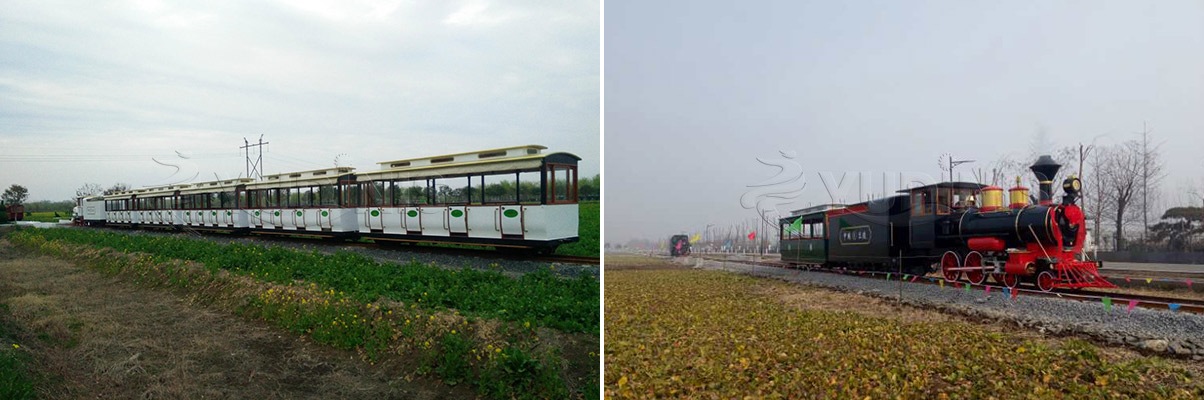
Run the Test With the Final Passenger Carriage
Test the tractor unit with the number and type of carriages the farm will actually operate. A short train can appear more manoeuvrable than a long train because the rear vehicle cuts a different path. Load the train with representative passenger weight and repeat the test in wet conditions where practical. The supplier should record the front and rear clearance, not only the path followed by the driver.
Record the Tightest Practical Turning Circle
Ask for the minimum turning circle plus a working margin for steering correction and driver reaction. Mark the inner and outer swept paths on the ground. These lines should remain inside the farm’s road edges, barriers and drainage covers. A useful visitor route clearance for a farm train review includes the width needed for pedestrians passing a stopped train. The approved route should use the demonstrated figure with a documented safety allowance.
Test Around Drains, Gates and Visitor Corners
Farm routes contain sharp transitions that do not appear in a simple radius drawing. Set out the train around the narrowest gate, the tightest bend and any loading area where visitors gather. Check whether the rear carriage swings toward a fence or waiting group. Repeat the test near barn entrances and areas used by tractors. The route should not depend on every driver making a perfect turn.
Validate Route Surface and Ground Bearing
Turning loads concentrate at the wheels and can damage soft ground, pavers or slope edges. Ask the supplier for axle loads and recommended surface conditions, then compare them with the civil engineer’s assessment. Test braking on the actual gradient and confirm behaviour on wet grass or mud near the route edge. Reviewing trackless train route specifications helps the buyer compare chassis and carriage options before final layout.
Confirm Driver Sight Lines and Stop Points
The test should include the driver’s view of mirrors, gates, animals and pedestrian crossings. Mark safe stopping positions where the train can wait without blocking a working yard. The driver needs enough time to see a visitor step forward from a queue. Test the emergency stop with the full train and record the stopping distance. A route that is technically passable but impossible to monitor should not receive approval.
Make the Test a Contract Deliverable
Write the route drawing, test weight, surface condition and acceptance limits into the purchase contract. General information on trackless train steering geometry explains why the towing vehicle and trailing carriages follow different paths. The buyer should sign off the test before the final payment and retain the measurements for staff training.
The turning-radius test protects the farm from costly route rebuilding and unsafe operating compromises. It must use the complete train, real surface conditions and the final visitor layout. The Dinis Trains route planning team can prepare the validation, and the starting equipment range is available at https://www.dinistrains.com/farm-amusement-trains-for-sale/.
Leave a Reply