Energy prices rise, spare parts get more expensive, and every motorised ride adds technicians, inspections, and downtime to the operating budget. Non-powered parks take a different path: they earn revenue from movement, imagination, and gravity instead of engines. This article explains how a non-powered park with low maintenance costs reduces both energy consumption and long-term upkeep, and what to specify so the savings are real rather than theoretical.
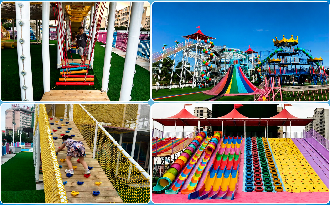
No Motors, No Ride Cycles
The largest saving comes from what the park does not buy. There is no drive motor, no control cabinet, no braking system, and no ride-cycle certification to maintain. That removes scheduled mechanical servicing, spare-part inventories, and the specialist technicians required to keep thrill rides running. Operators still inspect equipment, but the work focuses on structural integrity and surfaces rather than gearboxes, hydraulics, and electronics.
Lower Energy Consumption Across the Site
An unpowered park consumes electricity mainly for lighting, pumps in water play areas, and small amenities. That is a fraction of the load of a mechanical ride package, and it can be reduced further with LED lighting, solar-powered path lights, and daylight-driven opening hours. For destinations in hot climates, shifting part of the operating day into the evening lowers both energy bills and guest heat exposure, while still using lighting as the main electrical demand. Designing the park around energy-saving amusement park design also avoids the electrical infrastructure upgrades that motorised attractions usually require.
Maintenance Focused on Surfaces and Fasteners
Unpowered equipment ages through weather and use, so the maintenance calendar concentrates on impact-absorbing surfacing, rope and net condition, fixings, paint, and drainage. These tasks can be handled by the park’s own staff with simple tools, and replacement parts are cheap compared with ride components. A documented inspection routine – daily visual checks plus monthly detailed inspections – keeps small issues from becoming closures. Modular equipment makes replacement even easier, because a single damaged panel can be swapped without dismantling a structure. A completed reference such as the non-powered park project in the Philippines shows how modular unpowered zones are maintained in a demanding tropical climate.
Staffing and Supervision Efficiency
Without ride operators, the park needs fewer staff per guest. Attendants supervise zones rather than control machinery, and one team can cover several play areas with clear sight lines. Fewer emergency procedures to train, lower turnover risk, and simpler induction all reduce the hidden cost of labour. Where the park combines unpowered zones with a small number of mechanical rides, staff can be redeployed to peak areas instead of being fixed to a ride console.
Design Choices That Extend Service Life
Long-term cost depends on specification. Choose galvanised or powder-coated steel, stainless fasteners, UV-stabilised plastics, and marine-grade rope for coastal sites. Drainage, shade, and terrain design protect structures from water and heat, while modular layouts let you replace individual elements rather than rebuild whole zones. Buying from a manufacturer that supplies documented materials and spare parts avoids the most expensive scenario: equipment that cannot be repaired after five years.
Comparing Lifetime Cost with Mechanical Rides
When comparing investment options, model ten years rather than one. A non-powered park typically has lower capital cost per square metre, lower energy and maintenance spending, and fewer regulatory obligations, while still generating admission, event, and food revenue from long family visits. Mechanical rides may earn more per guest in some markets, but their operating and compliance costs rise steadily. Many successful parks combine both, using unpowered zones to absorb family traffic at low cost.
Non-powered attractions reduce cost by removing machinery rather than reducing guest experience, and the savings compound every season. Work with an experienced Dinis unpowered park manufacturer that provides durable materials and maintenance documentation, and review the safety and design principles behind a modern public playground. To compare layouts, materials, and lifetime costs, visit https://themeparkprojects.com/outdoor-unpowered-amusement-park-solution/ and request a tailored proposal.
Leave a Reply