A vintage train can be the most photographed ride in a park and still fail commercially, because families ride it once and walk away. The route, the stops and the pacing decide whether guests stay on board, return later and bring friends. This guide explains how to approach vintage amusement park train route planning with dwell time in mind.
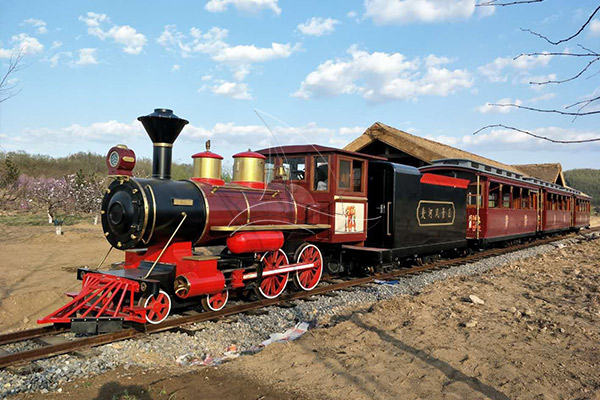
Start With the Story the Route Tells
A vintage train is a narrative attraction. The route should pass something worth looking at, pause where the view is best and return guests to a place they recognise. Draw the story first, then fit the track to it: a loop through a landscaped garden, a short tunnel, a water feature and a themed station give the ride a beginning, a middle and an end, which is what keeps families seated instead of checking their phones.
Design Stops That Add Value
Every stop is an opportunity and a cost. A stop at a playground or a refreshment point extends the visit and increases spending, while too many stops make the ride slow and the timetable unreliable. Choose one or two purposeful stops, make the platform comfortable and shade it, and confirm that boarding a pushchair or a wheelchair does not hold the train for several minutes.
Pace the Ride for Families
Speed is not the attraction on a vintage train. A gentle pace, a longer loop and a commentary or soundtrack that matches the scenery keep children engaged and give parents a reason to ride again. A family route for a family route for a vintage park train works best when the journey lasts long enough to feel like an outing but short enough that the queue keeps moving.
Plan Capacity Around Dwell Time
If guests stay on board for two circuits, the train carries fewer new passengers per hour, and the queue grows. Decide whether the ride is sold as a single loop or as an open-ended stay, then size the fleet and the station accordingly. Where dwell time is long, a second train or a longer platform may be better value than a larger locomotive.
Connect the Route to the Park Layout
The train should link areas that guests already want to visit, not run along the boundary where nothing happens. Reviewing general material on amusement park layout helps planners see how a transport ride can distribute visitors between zones, reduce walking and increase the time spent in secondary areas of the site.
Compare Rolling Stock for the Route
Finally, match the train to the route rather than to the brochure. Open carriages suit warm climates and short loops, enclosed cabins suit longer routes and wet weather, and the number of carriages changes both the capacity and the loading time. Comparing the trackless sightseeing train range with the vintage models shows how route length and cabin type interact before the order is placed.
A vintage train earns its place when the route gives families a reason to stay. Build the story first, design purposeful stops, pace the ride for children and parents, plan capacity around dwell time, connect the route to the park layout and match the rolling stock to the journey. Operators planning a heritage attraction can review the range from Dinis park train projects and start from the product page at https://www.dinistrains.com/vintage-amusement-park-trains-for-sale/.
Leave a Reply